 Share:

More than three decades after becoming the first landscape architect elected to the Chinese Academy of Engineering, Wang Juyuan (1913-1996) continues to shape how China studies and develops its landscapes.
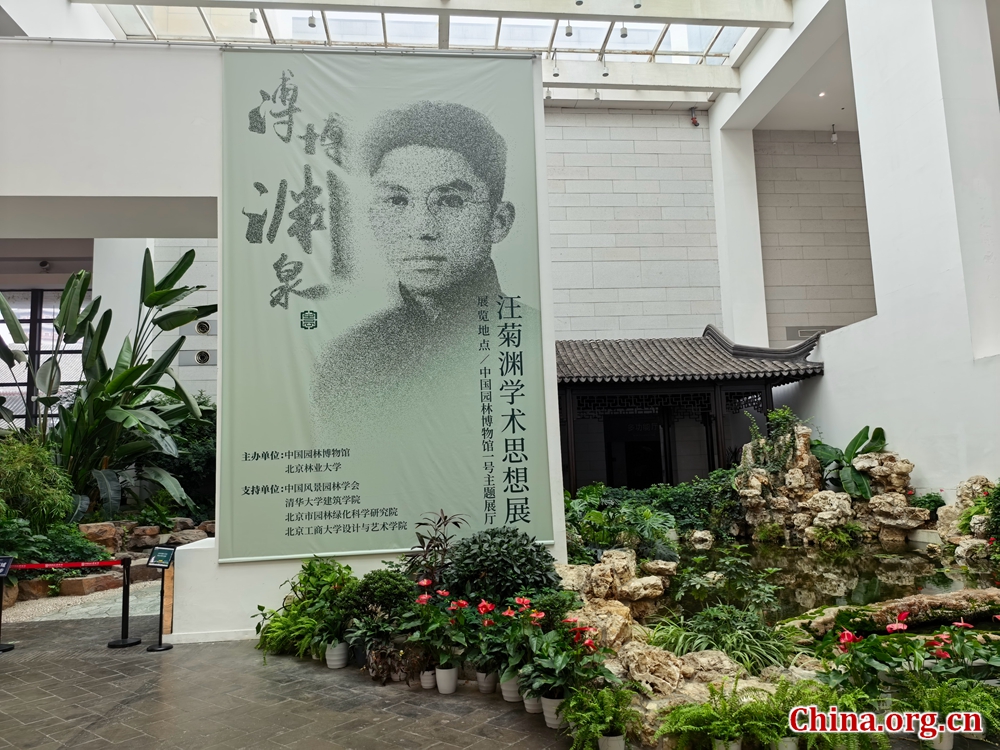
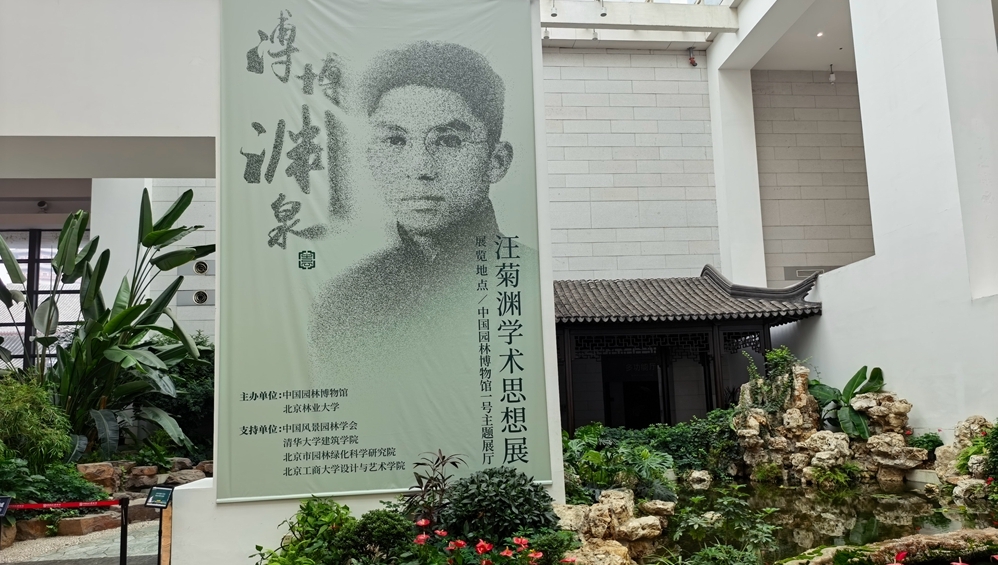
An exhibition titled "Profound Knowledge, Lasting Inspiration: Academic Thought of Wang Juyuan" is on display at the Museum of Chinese Gardens and Landscape Architecture in Beijing. [Photo by Mi Xingang/China.org.cn]
An exhibition honoring his life and academic legacy is on display at the Museum of Chinese Gardens and Landscape Architecture in Beijing, tracing the discipline's development in China through Wang's work.
Beijing Forestry University and the museum jointly organized the exhibition, titled "Profound Knowledge, Lasting Inspiration: Academic Thought of Wang Juyuan," which opened on June 22.
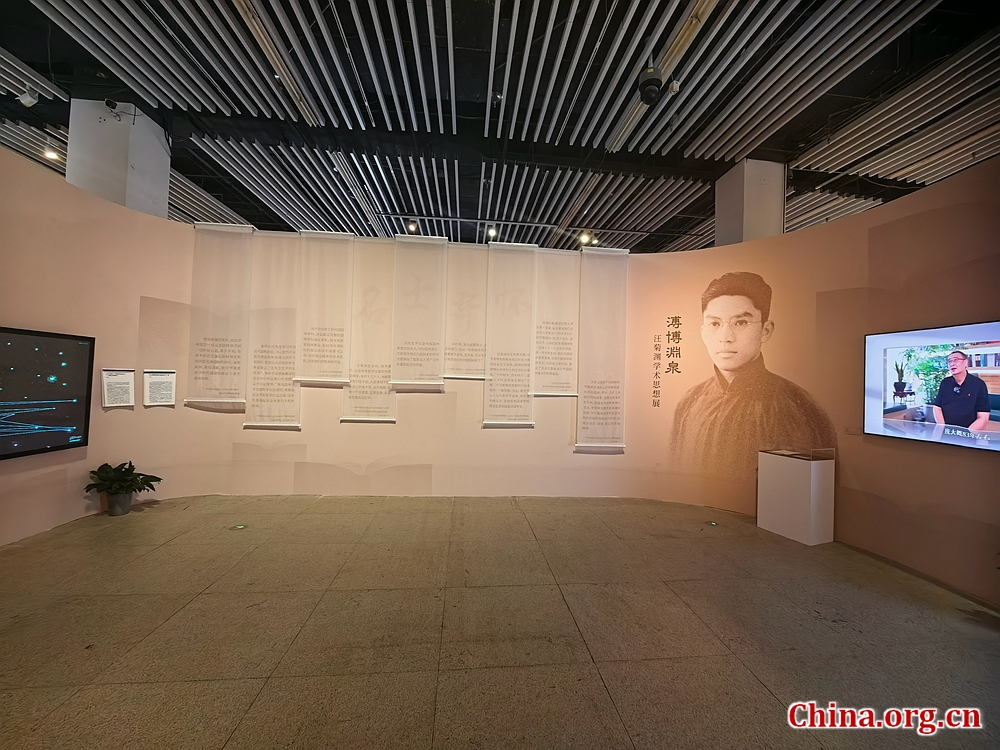
Hanging panels and video testimony record reflections from scholars, colleagues and students on Wang's academic work and character at "Profound Knowledge, Lasting Inspiration: Academic Thought of Wang Juyuan." [Photo by Mi Xingang/China.org.cn]
More than 300 exhibits, including manuscripts, photographs, archival documents and videos, follow Wang's six-decade career and his role in establishing landscape architecture as an independent academic discipline after the founding of the People's Republic of China.
The exhibition is divided into three sections, following Wang's journey from a young student inspired by the ideal of "saving the nation through science" to an educator and scholar whose ideas continue to resonate.
One gallery covers Wang's early years through school medals, certificates and personal memorabilia. The display documents his path from chemistry studies at Dongwu University, founded in Suzhou in 1900 and also known as Soochow University, to agriculture at the former University of Nanking, where he graduated in 1934 before beginning a lifelong career in landscape architecture.
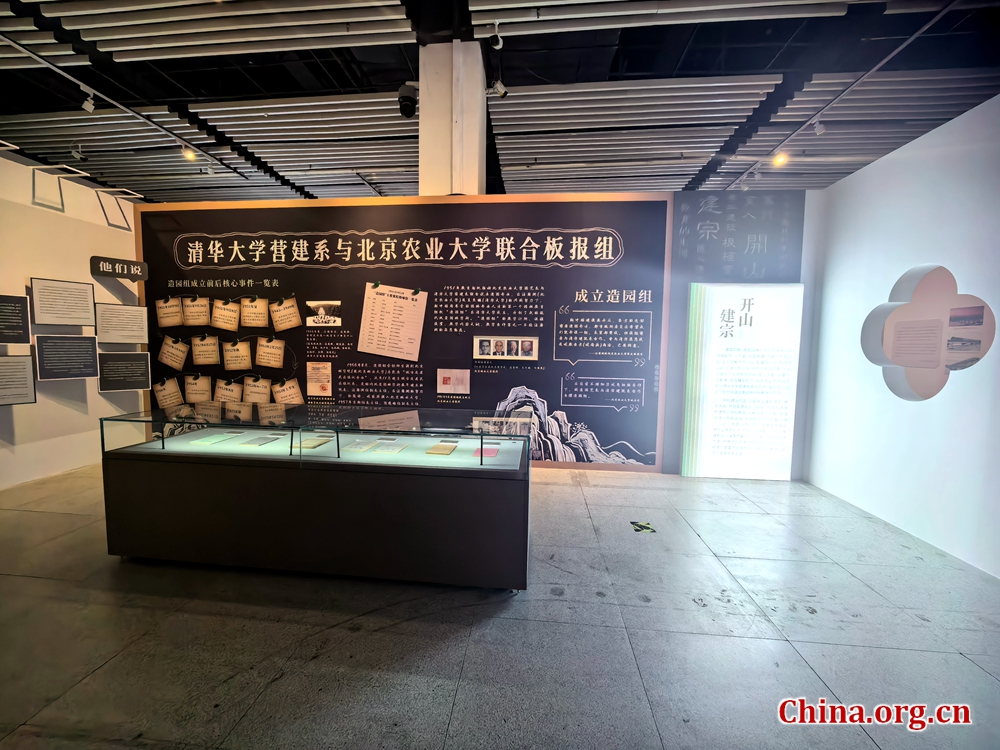
Panels and archival documents record the founding and early years of New China's first university program in landscape architecture. [Photo by Mi Xingang/China.org.cn]
Another section covers Wang's role in building China's landscape architecture education system. In 1951, he helped establish the first university program in the field for the People's Republic of China and later moved it to Beijing Forestry College, now Beijing Forestry University. Approval documents, teaching schedules and class photographs record the discipline's formative years.
In the 1980s, Wang led the compilation of the landscape architecture volume of the "Encyclopedia of China: Architecture, Landscape Architecture and Urban Planning," published in 1988. He proposed a three-tier framework of traditional garden studies, urban greening and territorial-scale landscape planning that helped define the discipline in China.
The final section turns to his scholarship and mentorship. His textbooks "An Outline of the History of Ancient Chinese Gardens" and "An Outline of the History of Foreign Gardens" became standard references for students, while his later "History of Ancient Chinese Gardens" advanced the systematic study of classical gardens. Wang also taught landscape architects including Chen Junyu and Meng Zhaozhen, who went on to lead the profession.
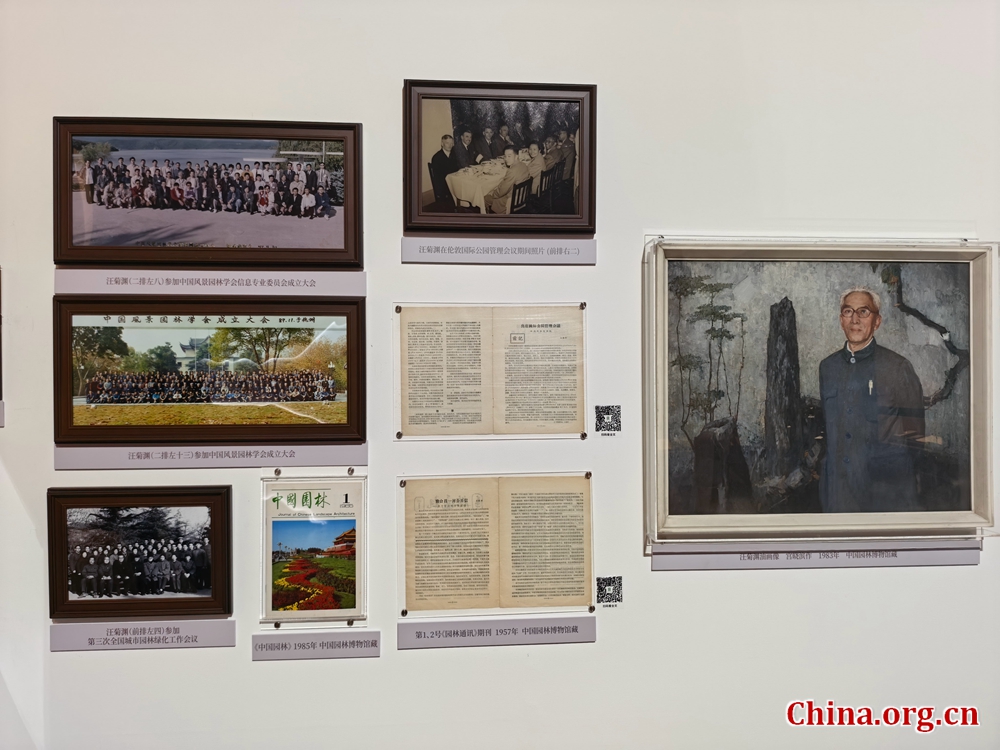
Historical photographs at "Profound Knowledge, Lasting Inspiration: Academic Thought of Wang Juyuan" document the establishment of several national professional organizations and Wang's representation of China at international conferences. [Photo by Mi Xingang/China.org.cn]
Wang also worked in public service. As director of the Beijing Municipal Forestry and Parks Bureau, he promoted urban greening and scientific planning. He helped establish several national professional organizations and represented China at international conferences, contributing to the global recognition of Chinese garden culture.
Li Rusheng, president of the Chinese Society of Landscape Architecture, said at the opening ceremony that Wang built the discipline's theoretical framework, urged students to learn from history and nature and pushed to combine research with practice, laying the foundations for ecological restoration, urban green space planning and landscape conservation in China.
At a symposium later that day, Jia Jianzhong, vice president of the society, said Wang's interdisciplinary vision still offers guidance for territorial spatial planning, urban renewal and cultural heritage preservation.
More than a tribute to one scholar, the exhibition shows how Wang's work continues to shape the discipline he helped establish.


 京公网安备
11010802027341号
京公网安备
11010802027341号