


 Share:


When Yu-Peng Chen signed with Deutsche Grammophon (DG) in 2025, he became the first Chinese composer to join the legendary classical label. His new album for DG, "The Poem of Life," which was released on Sept. 25, is the result of a dream he has harbored for nearly two decades.
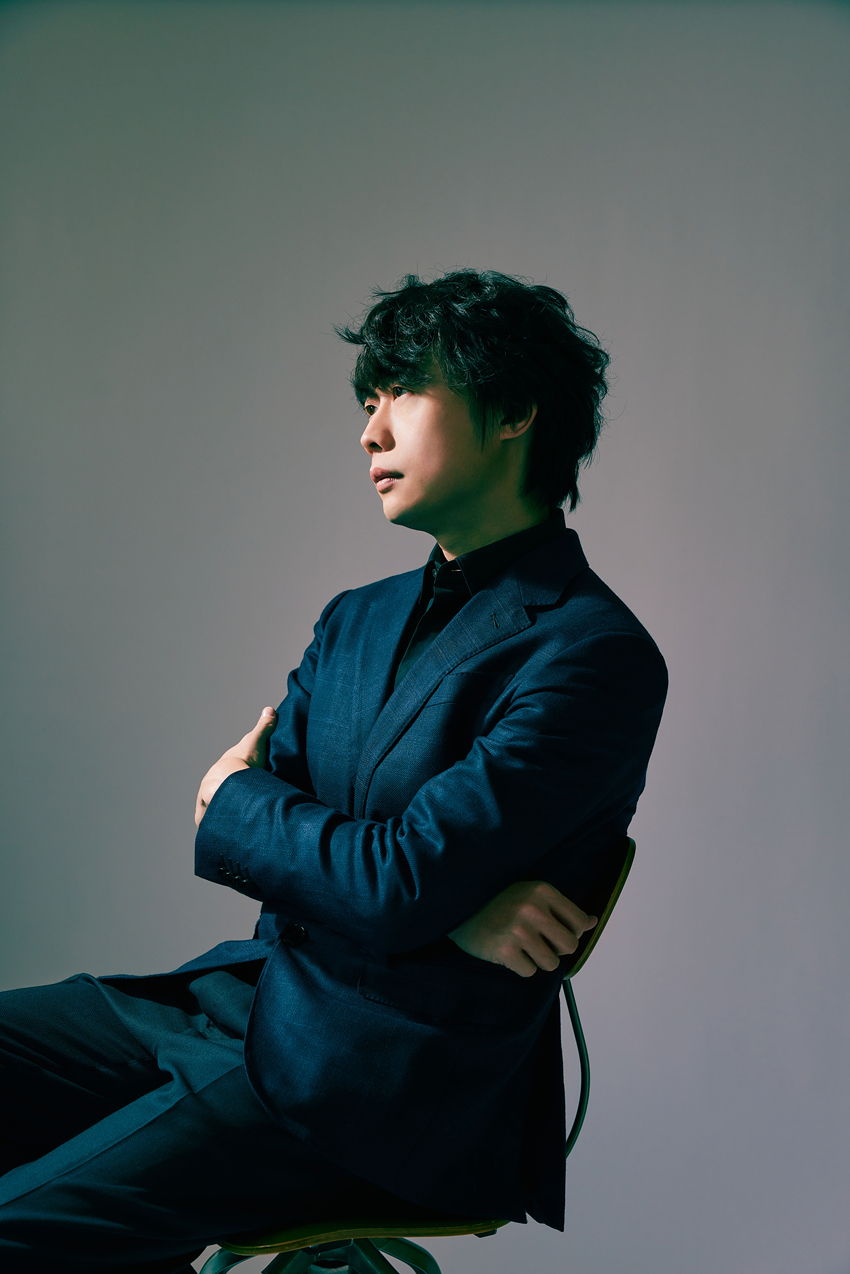
Chinese composer Yu-Peng Chen. [Photo courtesy of Deutsche Grammophon]
The album is a 12-movement symphonic suite for piano and orchestra, tracing an emotional arc from birth to farewell. Chen, who also appears as piano soloist, recorded it with the Shanghai Philharmonic Orchestra under conductor Zhang Liang at the Shanghai Philharmonic Concert Hall.
"This idea has stayed with me for nearly 20 years," Chen told China.org.cn. "Over those two decades, I composed advertising music, television and film scores, and, as many listeners know, plenty of game soundtracks. My life was full, yet this dream quietly remained waiting."
Chen is best known for his scores for the global hit game "Genshin Impact." But "The Poem of Life" marks a turn toward something more personal: a concert work that draws on his narrative experience in game music while embracing a more intimate, classical form.
The album was not conceived as a traditional piano concerto. Rather than following the conventional three- or four-movement structure, Chen split the composition into 12 self-contained yet interconnected pieces, each lasting roughly four to five minutes.
Chen said the 12 movements were not a form he decided on from the start. He said they naturally arranged themselves, with each piece complete on its own but forming a whole life journey from birth to farewell when listened to in sequence.
The album's Chinese title, literally "A Long Confession," took Chen a year and a half to settle on. "Confession" carries two meanings: a confession between people, and, for Chen, a confession to classical music itself. He added that the album is also a private gift for his daughter, one he hopes she will come to understand as she grows and experiences life.
The composer said nearly every piece contains his respect for the classical masters, citing Baroque textures, Romantic melodic lines, Impressionist colors and jazz harmony. He said this was not a deliberate imitation of any era, but more like standing in the present, looking back at the long tradition of classical music and speaking back to those great musical languages in his own way.
Meanwhile, the Chinese elements are not intended to be decorative. The seventh movement, "Under the Moonlight," is built entirely on China's pentatonic scale, with traditional instruments as the lead voices: erhu, pipa, guzheng and sheng carry the melody, while the orchestra supports them.
Chen said the traditional instruments are the main protagonists, and that this is not simply adding Eastern elements on top of a symphony. He said Eastern instruments lead while orchestral instruments support the pentatonic melody, and that he wants to use the word "dialogue" to describe the relationship between the traditional instruments and the orchestra, because every instrument has its own moment to speak.
The sheng, a traditional reed instrument with more than 2,000 years of history, appears in the middle interlude. Chen said its warm, gentle tone carries the classical elegance of Chinese literati, and added that for Chinese listeners, the sound evokes feelings of home.
The album also features renowned opera singers Li Yi and Zhou Zhengzhong in the 10th movement, "Where Longing Ends," blending Eastern philosophy with symphonic language. Guest musicians include the violinist Daniel Hope, mandolinist Avi Avital and cellist Philipp Schupelius.
The recording took nearly three weeks of concentrated sessions over about two and a half months. Chen said the aim was not technical perfection, but rather trying to capture the moment when the notes suddenly become vivid and strike the heart.
Chen said his approach to blending Chinese and Western music was shaped by 20 years of commercial work and a broader shift in Chinese audiences' tastes toward traditional Chinese-style music. He said Eastern elements are not simply pasted onto a Western framework, and that he seeks to fully integrate Chinese expression into the orchestration rather than be limited to the pentatonic scale or a single instrument, so that even the flute, oboe, violin or cello carries an Eastern imprint.
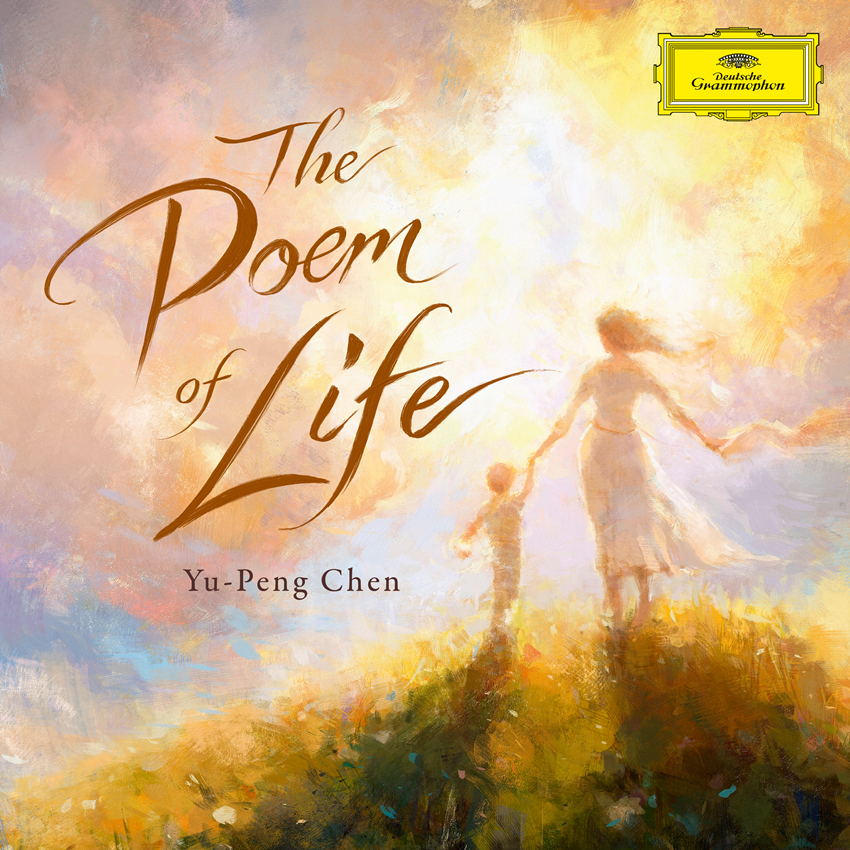
The cover art for "The Poem of Life." [Image courtesy of Deutsche Grammophon]
In "The Poem of Life," music itself becomes the storyteller. The linear, self-contained narrative is rooted in Chen's own life: a reflection on a lifetime of gains and the quiet acceptance of future losses.
"I want listeners to find precious memories of those defining 'first moments' from their own lives within this album," he explained. For Chen, the album is intended as a "vessel" for the emotions that define human experience, inviting listeners to reflect, remember and reconnect with their own life stories.


 京公网安备
11010802027341号
