


 Share:

The 2026 China Fashion Week (Autumn) opened in Beijing on Sept. 3, bringing together more than 220 brands from four continents for eight days of runway shows, exhibitions, industry forums and business events.
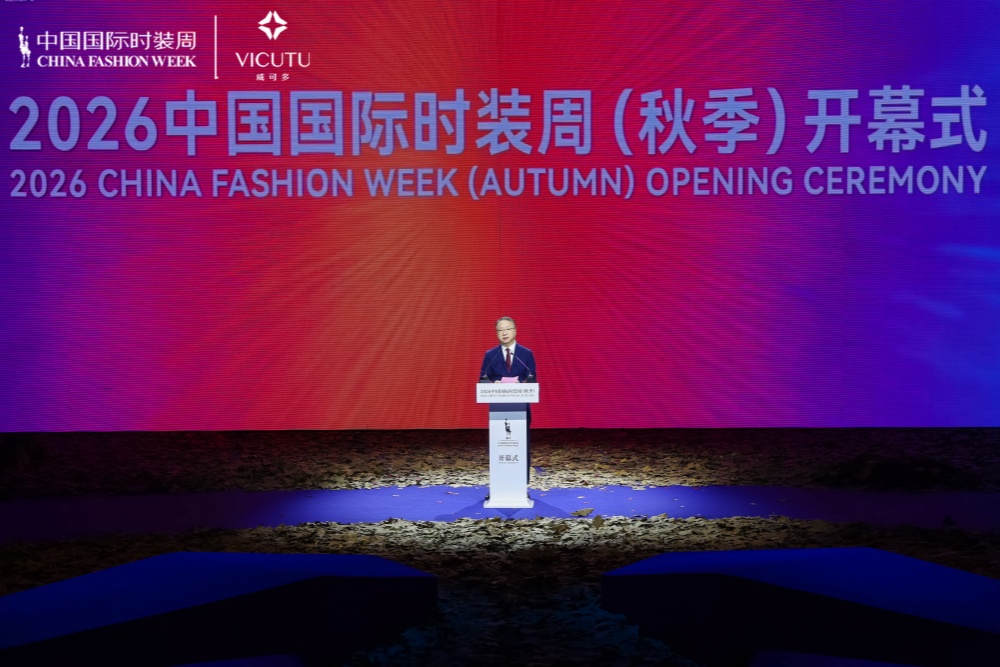
Sun Ruizhe, president of the China National Textile and Apparel Council, announces the opening of the 2026 China Fashion Week (Autumn) in Beijing, Sept. 3, 2026. [Photo provided to China.org.cn]
Sun Ruizhe, president of the China National Textile and Apparel Council, announced the opening. More than 600 guests attended the launch, including government officials, industry representatives, diplomats, designers, professional buyers and members of the media.
The fashion week centers on product launches, debut shows and exhibitions, aiming to bridge creative presentations, industry cooperation and consumer markets. It also supports Beijing's push to become an international consumption center.
Activities are being held at venues across the capital, including the 798 Art District, the Beijing Exhibition Center, the CAFA Art Museum and the Longfu Cultural Center.
Participating brands and designers come from China, Japan, South Korea, Russia, France, Switzerland, the United States, Colombia, Zambia, Malawi and other countries. The collections cover menswear, womenswear, haute couture, contemporary Chinese-style clothing, outdoor apparel, sustainable fashion and digital design.
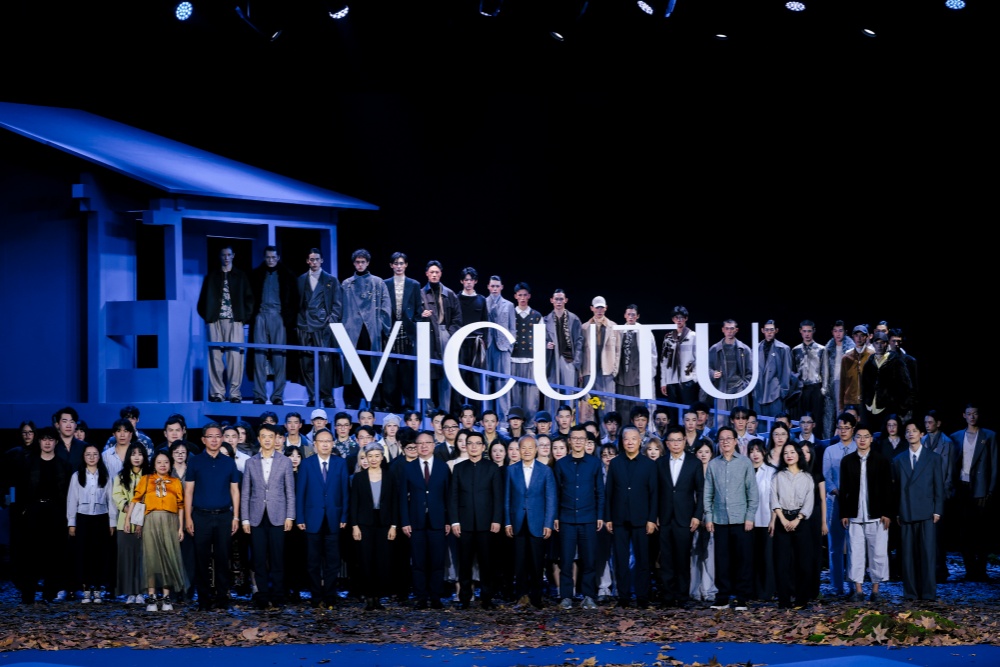
Guests and models pose for a group photo at the opening show of the 2026 China Fashion Week (Autumn) in Beijing, Sept. 3, 2026. [Photo provided to China.org.cn]
Chinese menswear brand Vicutu presented the opening show with a collection focused on mobility, comfort and functional design. Later presentations will feature both established designers and emerging talent, reflecting the diverse directions shaping China's apparel industry.
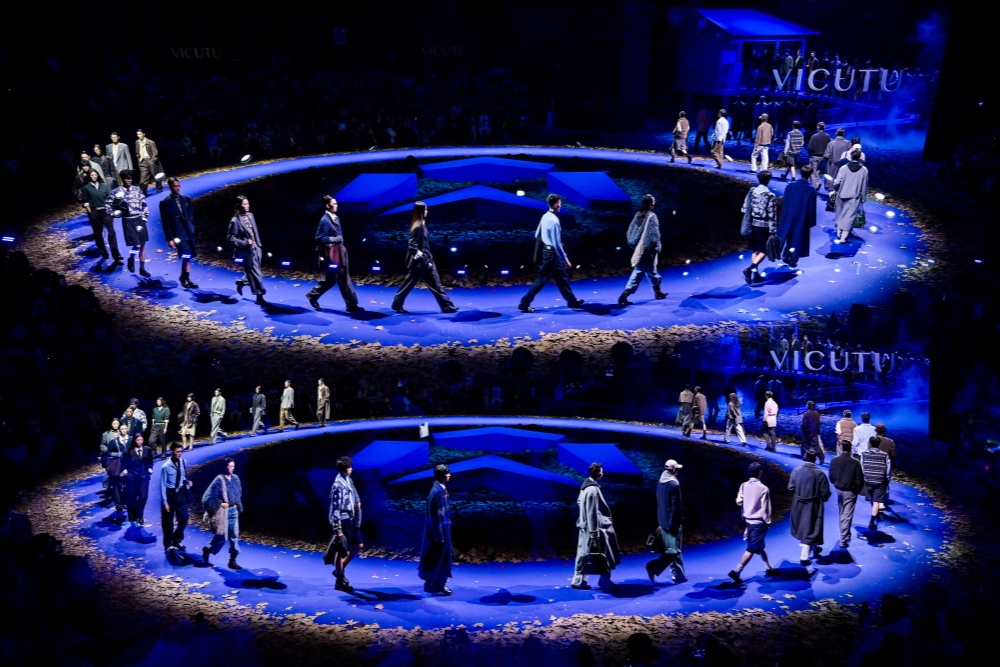
Models present Vicutu's collection during the opening show of the 2026 China Fashion Week (Autumn) in Beijing, Sept. 3, 2026. [Photo provided to China.org.cn]
A major focus this season is the contemporary use of traditional Chinese aesthetics and craftsmanship. Designers are drawing on the solar terms, silk-making traditions and heritage textiles such as Song brocade and Xiangyunsha (gambiered gauze), while applying modern tailoring and structural techniques. Some collections also examine the relationship between clothing, the body and individual identity.
Beyond the runway, the program extends to major art exhibitions, including "A Retrospective of Lyu Yue's Art and Pedagogy," the Liu Wei eco-fiber art exhibition "Reborn in One Thought: From Waste to Art" and "The Dunhuang Culture & Art Exhibition."
Digital fashion also appears in this season's program, with designers using algorithms and data to present traditional Eastern materials in both virtual and physical forms.
Several runway shows combine collection launches with livestreaming and sales through e-commerce platforms and physical stores. Fashion week activities are also being held at shopping centers in Taiyuan and Zhengzhou, and pop-up spaces have been set up at the 798 Art District.
The fashion week's official trade fair, DPARK Fashion Fair (ODM), features more than 60 companies and nearly 100 brands. Its four sections cover original design, supply chain matchmaking, technological innovation and the content ecosystem. More than 10 related events cover topics including color trends, fabric technology, the industrial development of intangible cultural heritage, international trends and new forms of consumption.


 京公网安备
11010802027341号
京公网安备
11010802027341号