


 Share:

To mark China's second National Science Popularization Month this September, the China Science and Technology Museum in Beijing has launched a series of interactive science activities aimed at boosting public interest in innovation, particularly among young people.
Under the theme "Science and Technology Changes Life, Innovation Shapes the Future," this year's monthlong campaign is organized by the China Association for Science and Technology alongside other relevant departments. Local authorities across the country are staging tech-rich events throughout the month.
At the Beijing venue, visitors can engage directly with cutting-edge science through hands-on exhibits. In an outdoor space dedicated to the intersection of science and sports, students learn about key physical principles through fun activities, such as riding specially engineered bicycles.
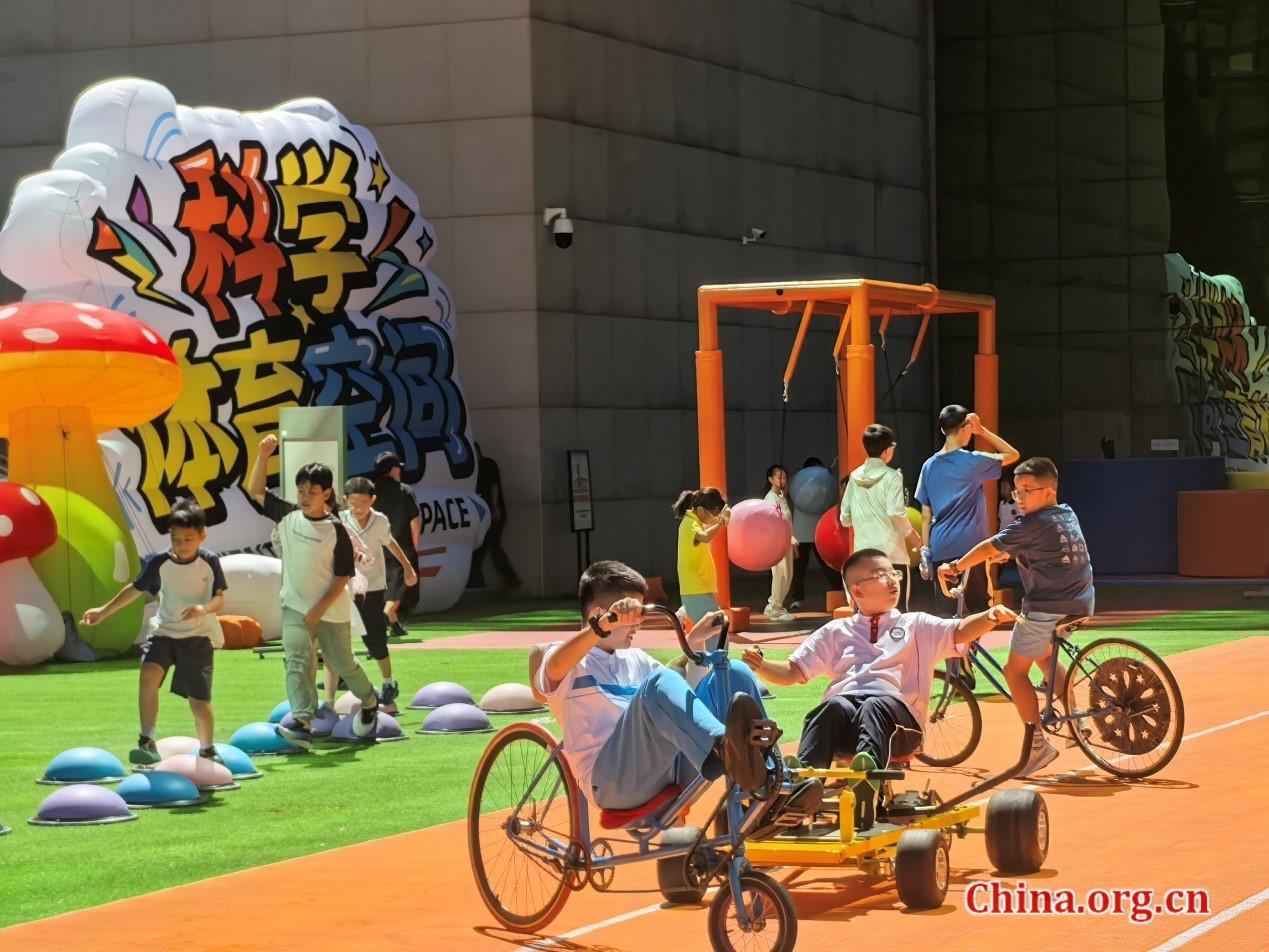
Children explore core physical principles during hands on activities at the China Science and Technology Museum in Beijing, Aug. 31, 2026. [Photo by Yuan Fang/China.org.cn]
"It's great fun to work as a volunteer here, introducing the science behind the exhibits," said Song Luoyi, a 12-year-old student from Jinan in Shandong province. "It benefits both me and the visitors. I really enjoy it."
To bring frontline research closer to the public, the museum has created a dedicated section showcasing how scientific achievements are converted into educational content. Highlights include a brain-science exhibition, national award-winning science communication works, and public-friendly adaptations of large-scale scientific facilities and laboratory breakthroughs.
Among the featured innovators is Li Zhenkun, a researcher from Beijing Jiaotong University, who demonstrated his "Rheobot" — a novel soft robot powered by magnetic smart materials, fluid dynamics and 4D printing.
Li noted that such robots hold significant medical potential, with future applications including operating inside the human body as a supplement to traditional medical treatments.
According to museum officials, this section acts as a bridge connecting researchers with the public, helping boost people's understanding of basic research and building confidence in sci-tech innovation.
Another key section explores new approaches to integrating education, technology and talent cultivation. It presents the results of the museum's "Scientific Methodology Bootcamp," where students collaborated with science teachers and an AI agent to build a simulated extraterrestrial research station.
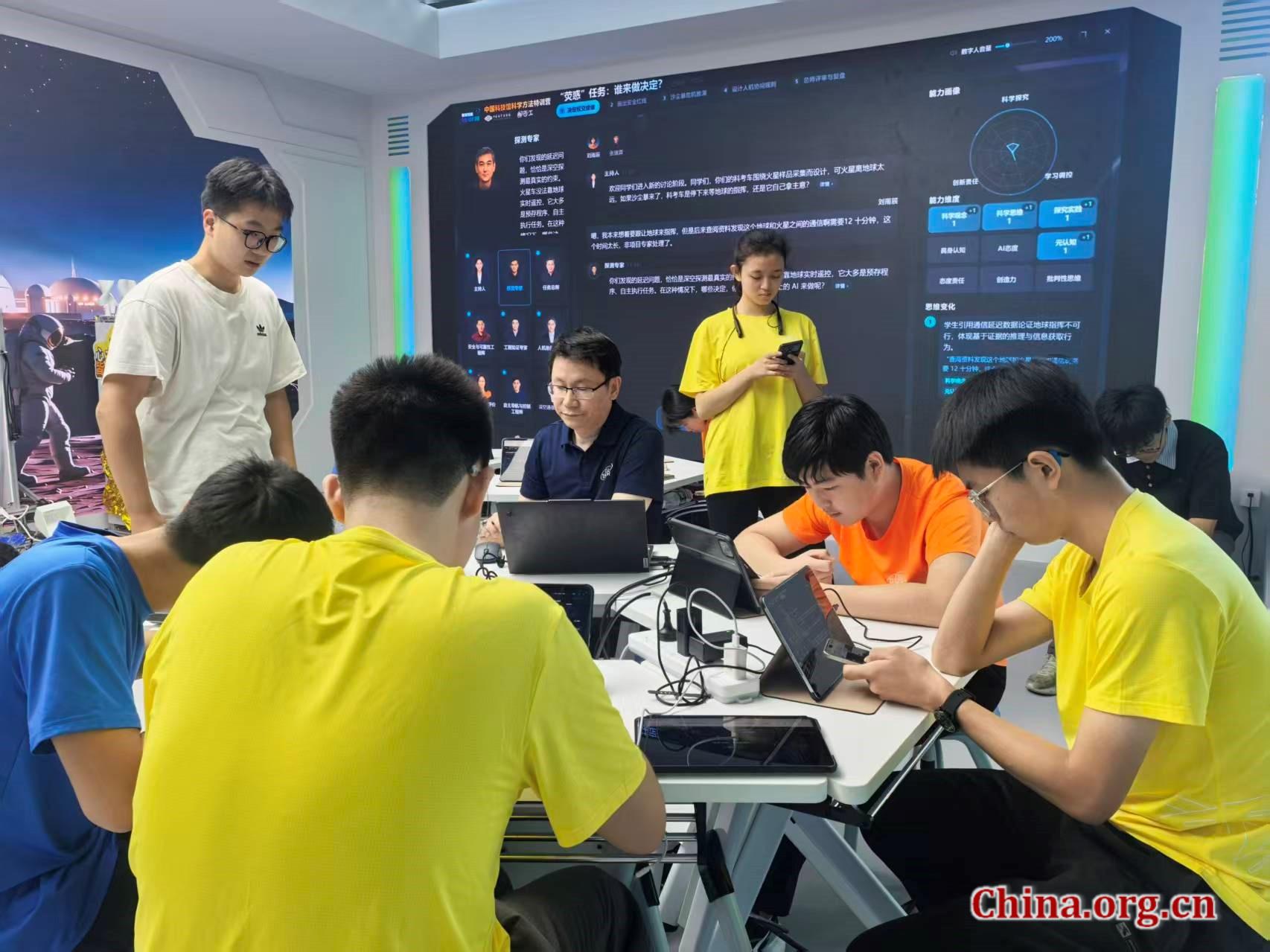
Students construct a simulated extraterrestrial research station alongside science instructors and an AI assistant at the China Science and Technology Museum in Beijing, Aug. 31, 2026. [Photo by Yuan Fang/China.org.cn]
Also in the section, young participants can take part in a full-cycle inquiry experience that combines lunar-base design, science-fiction scriptwriting, physical sandbox construction and stage performances.
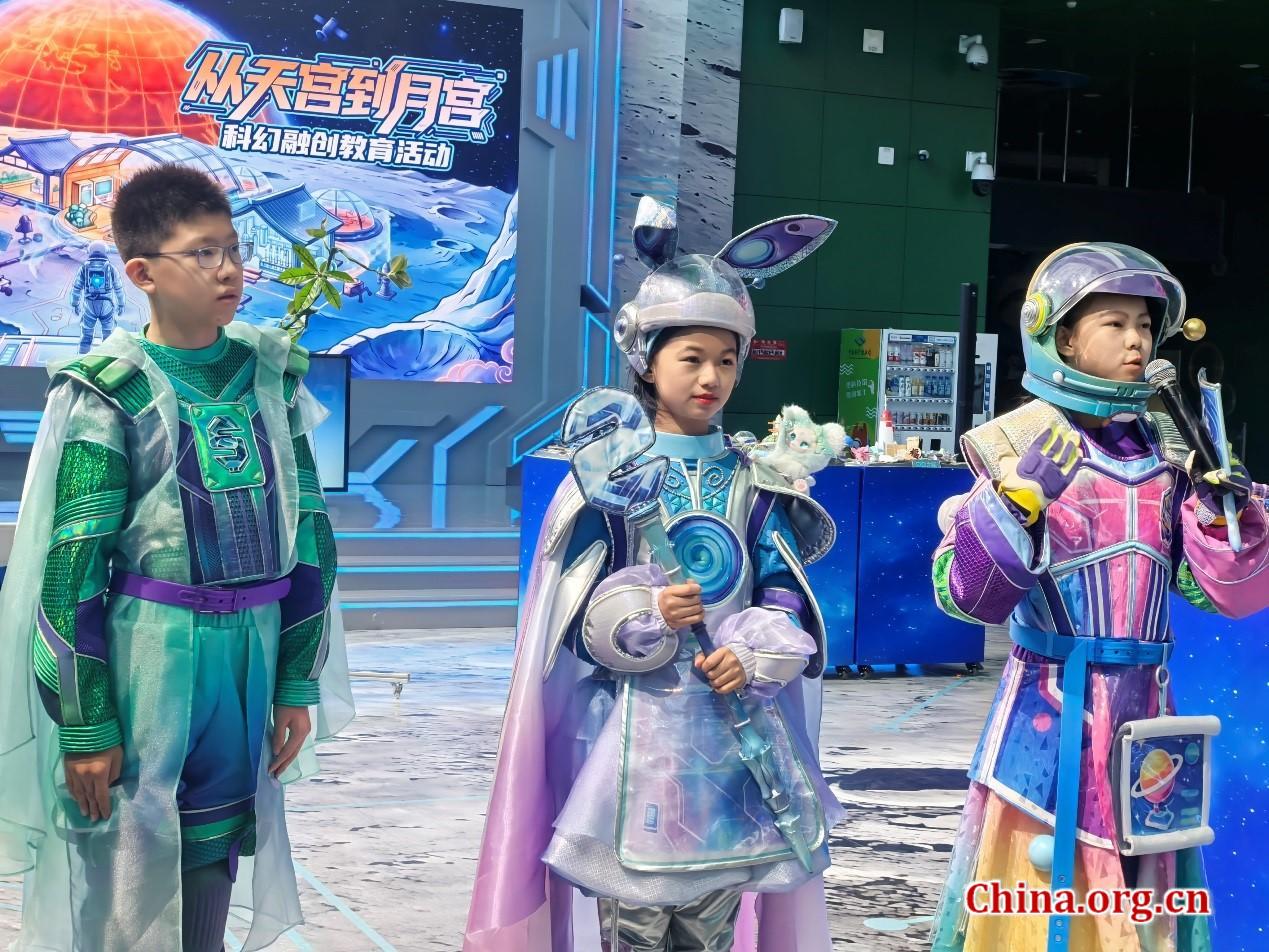
Young participants take part in a space-themed activity at the China Science and Technology Museum in Beijing, Aug. 31, 2026. [Photo by Yuan Fang/China.org.cn]
An instructor at the museum noted that these immersive, space-themed scenarios encourage youngsters to turn raw curiosity into a sustained passion for exploration, supporting the early-stage cultivation of future innovators.


 京公网安备
11010802027341号
京公网安备
11010802027341号